
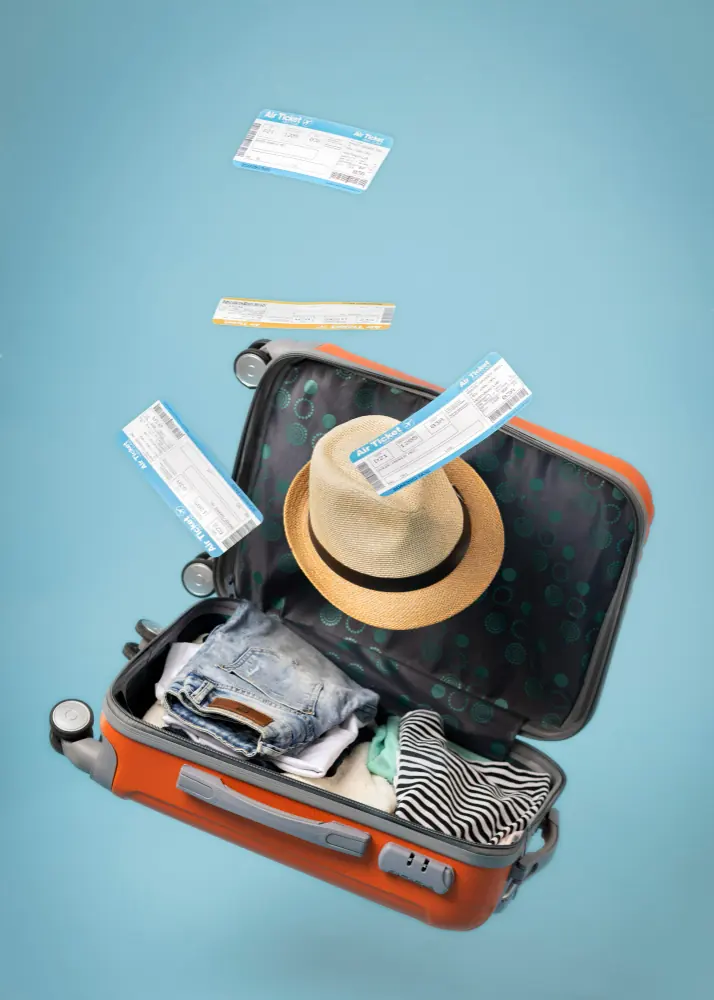
A week away weighs the same as three days away, provided you are willing to wash a pair of socks in a sink. Everything after that is a matter of being honest about which items you actually use. Mine have been counted, in a spreadsheet, across more trips than I would like to admit.
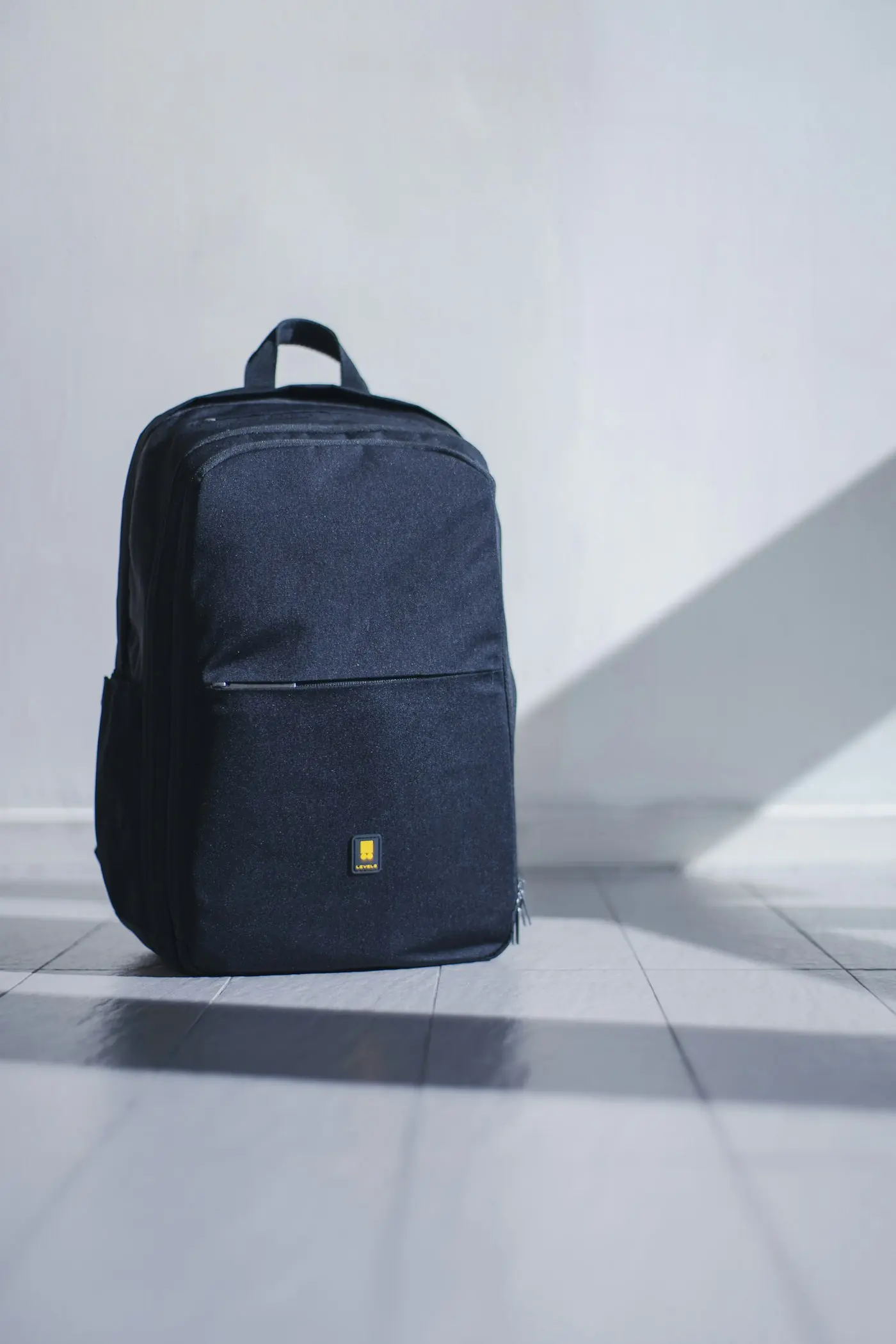
This list is built for seven days in a mild to warm climate with a 30 to 40 litre backpack, in cabin baggage only. It should come in at around 7 to 8 kg once you have added the bag itself. Cabin allowances vary between airlines, and the free under-seat bag on some budget airlines is only about 40 x 20 x 25 cm, so check your ticket before you buy anything. A larger cabin bag of around 55 x 40 x 20 cm is a common paid option.
The complete list
You can print or tick this off on our packing checklist page. The numbers include what you wear on the plane.
Clothes
- 3 or 4 tops, one of them good enough for a nice dinner
- 1 warm layer: a thin fleece or merino jumper
- 1 lightweight waterproof jacket
- 2 pairs of trousers or a pair of trousers and shorts or a skirt
- 4 pairs of underwear and 3 pairs of socks
- Something to sleep in that can double as a spare top
- Swimming costume, if there is any chance of water
- 1 pair of comfortable walking shoes, worn on the plane
- 1 pair of sandals or light shoes
Toiletries and health
- Toothbrush and small toothpaste
- Solid deodorant and solid shampoo bar, which do not count as liquids
- Small sun cream and lip balm with SPF
- Razor, if needed (check the rules on blades)
- Prescription medicines in their original packaging, with a copy of the prescription
- Small first aid kit: plasters, painkillers, rehydration sachets, anti-diarrhoea tablets
- Earplugs and an eye mask, which take up nothing and have saved many nights
Tech
- Phone and charging cable
- Plug adapter: most of mainland Europe uses a two-pin plug, so check the type for anywhere else
- Power bank, in your cabin bag and never in checked baggage
- Headphones
- Camera or e-reader, only if you will honestly use it
Documents and money
- Passport, with enough validity for where you are going
- GHIC, if travelling in the EU
- Travel insurance details saved offline
- Two bank cards, kept in different places, and a little local cash
- Boarding passes, plus a paper copy if your phone battery is unreliable
- Driving licence, if you might hire a car
For what to check well before you leave, see our guide to documents a month before you fly.
Useful extras
- Refillable water bottle, empty at security
- Foldable day bag for when you leave the backpack at your room
- Small bag for laundry, a universal sink plug and a little travel wash
- Quick-drying towel, if your accommodation will not supply one
- Pen, because you will always need one when filling in a form at a border
If you packed it for a just-in-case that has never happened, it can stay at home.

What to leave behind
Most overpacking comes from imagining a different person on holiday, one who goes for sunrise runs and reads three hardbacks. Here is what you can leave out with a clear conscience:
- A hairdryer. Most hotels and many apartments have one, and if they do not, you will live.
- A fourth pair of shoes, or a third. Shoes are the heaviest clothes you own, and two pairs cover almost everything.
- Full-size bottles. Decant into small containers, or buy what you need when you arrive.
- Jeans, if you can avoid them. They are heavy and slow to dry. If you must, wear them on the plane.
- Just-in-case outfits. If you have not got a specific occasion in mind, there is no occasion.
- Towels, in most hotels. Check, then save the space.
- A laptop, unless you are working. Your phone will do for maps, tickets and the odd email.
- A stack of paperbacks. Take one and swap it on the way, or use an e-reader.
The test I use: if you can buy it cheaply on arrival, and you might not need it at all, leave it behind. You can buy sun cream and socks almost everywhere. You cannot easily buy your prescription medicine, your passport or a phone charger at 11pm in a small town, so those come with you.
How to pack it
- Lay it all out first. Then take away a quarter of it. You will not miss most of it.
- Roll the soft things. Rolled tops and underwear fill the gaps, and packing cubes keep them from spreading once you start living out of the bag.
- Put the heaviest things close to your back, around the middle of the bag. Shoes and tech go here, and the bag will feel noticeably lighter.
- Keep liquids and tech near the top or in an outer pocket, so you can get to them at security without unpacking your underwear in front of a queue.
- Wear the bulky things on the plane: walking shoes, jacket and jumper. Pockets count as free space.
- Leave a little room. About 10 per cent empty when you leave is what you need for a bottle of something good on the way home.
Washing, so that seven days works
The list only holds if you wash something every two or three nights. It takes ten minutes. Use the sink, a little travel wash or hotel soap, then roll the item in a towel and press hard before you hang it up. Merino wool and synthetic fabrics are usually dry by morning, and cotton often is not, which is worth remembering when you choose your tops. On a longer trip, a launderette once a week costs a few pounds, and it is a good way to see a part of town you would not otherwise visit.
Cabin liquids: check your airport
This is the one rule that has become really confusing. For years, the rule at UK airports was simple: containers of no more than 100 ml, all in one clear resealable bag of about 20 x 20 cm. Newer scanners have since allowed some UK airports to relax this, with some now accepting larger containers, up to 2 litres, and not requiring you to take them out. Other airports still enforce the 100 ml limit. And the rule on your way home depends on the airport you are leaving from, which may well be stricter than the one you left.
So check your airport's own website, for both directions, shortly before you fly. If in doubt, pack to the old rule: 100 ml containers in a clear bag still work everywhere. Medicines and baby food may be allowed in larger amounts, but it is sensible to carry proof and to check ahead.
Adapting the list
For a cold trip, swap the sandals and shorts for thermals, a warm hat and gloves. Our guide to Iceland in summer and winter has a full cold-weather list. For a beach week, drop the second pair of trousers and add a second swimming costume and a sarong. And if a cheap fare has tempted you to go hand-baggage only for the first time, our guide on finding cheap flights explains why that is usually where the real saving lies.
Comments (2)
Sophie Tan
Took this list to Croatia for eight days and came back having worn everything except the waterproof, which is about the best result I have ever had. The sink plug was the hero.
Martin Doyle
Do the solid shampoo bars really get through security without any bother? I have only ever taken the little bottles.
VAMOSVIVER editors Editorial reply
They do at every airport we have used, since they are solids rather than liquids. Keep them in a small tin or bag in case they are damp, and security staff always have the final say.
Leave your comment
Your email address will not be published. Comments appear after moderation. All fields are required.