
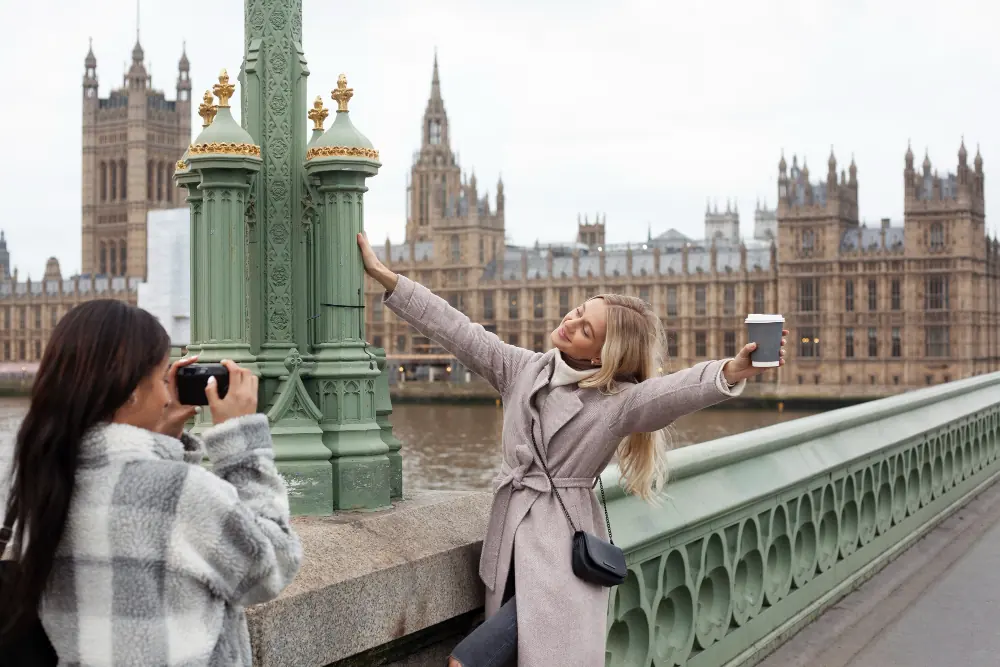
You do not need a new camera. What separates a snapshot from a magazine page is mostly where you stood, what time it was and what you did afterwards, and none of those costs anything.
I keep a spreadsheet of my travel mistakes, and the photography tab is long: eleven years of leaning horizons, one very sharp thumb and a whole trip to Rome that came out looking slightly foggy. What follows is everything that tab has taught me. None of it needs a lens attachment, a tripod or a course.
Before you take a single picture
Three things take less than a minute and will improve your photographs more than anything else here.
- Clean the lens. A phone spends its life in pockets and hands, so the lens is nearly always greasy. That greasy film is what gives you hazy pictures and smeared halos round street lights. Use a soft cloth or the corner of a clean T-shirt, and do it every time.
- Turn on the grid. It is in the camera settings on nearly every phone. It helps with both straight horizons and placing your subject.
- Turn off the flash. It will not reach the cathedral, and it is unkind to your dinner.
Also, go easy on the zoom. If your phone has a separate telephoto lens, use it. Beyond that, digital zoom is just cropping with extra smudge, so use your feet.
Clean the lens, wait for the light, take one step closer. That is most of the secret.

Composition: where to stand
Before you press anything, ask what the picture is of. If the answer takes more than a few words, you are too far away.
Simple rules that hold up
- Use the thirds. Put your subject on one of the grid lines, and the horizon on the top or bottom line, not through the middle.
- Take one step closer. Then another. Phone lenses are wide, so everything looks further away than it did to your eye.
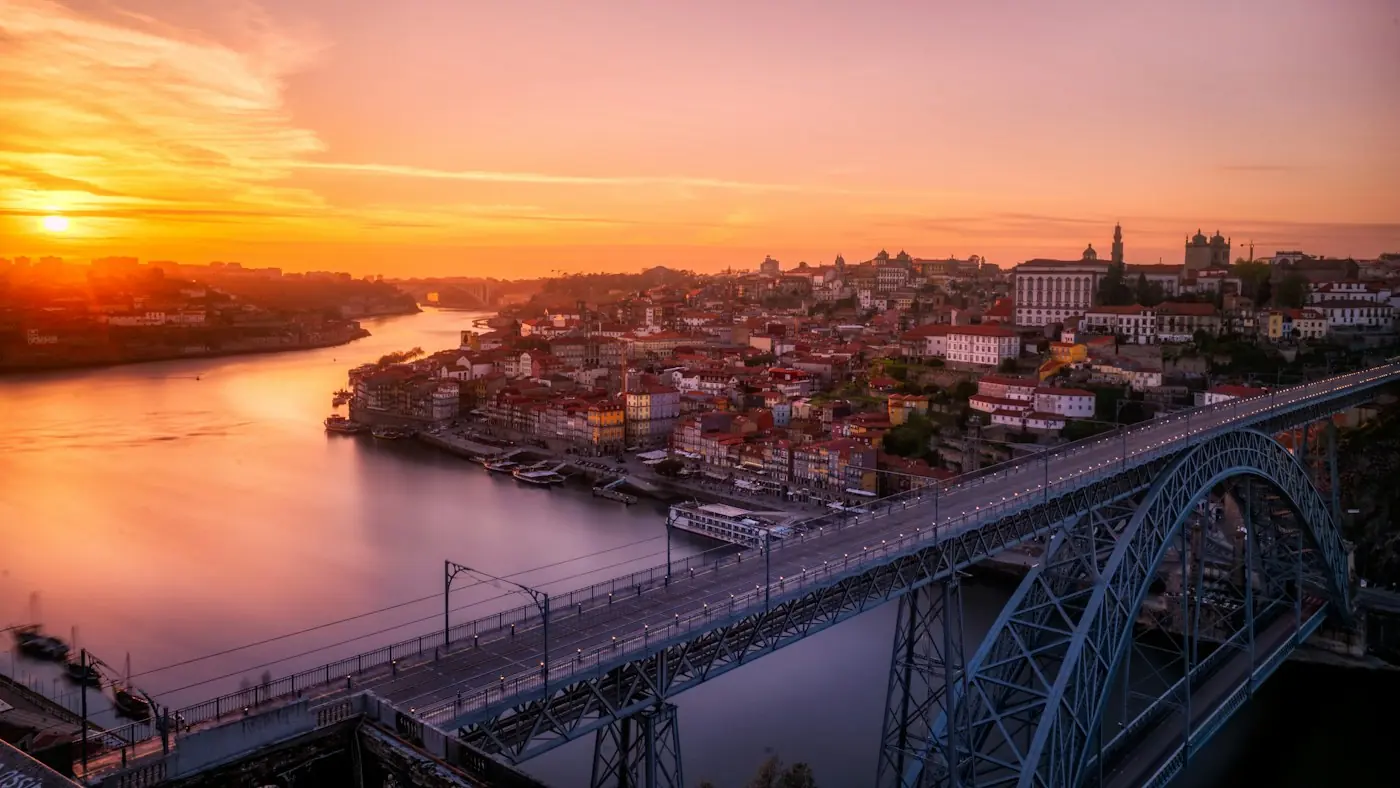
- Add a foreground. Hold the phone low and include a railing, a doorway or a table edge. This gives a flat view some depth. From the Vila Nova de Gaia side in Porto, put a moored boat in front of the Dom Luís I Bridge and see the difference.
- Follow the lines. Tram rails, canals, sea walls and long streets all pull the eye into a picture.
- Keep it level. Tilting the phone upwards makes buildings look as if they are falling backwards. Step back, hold it upright and crop later.
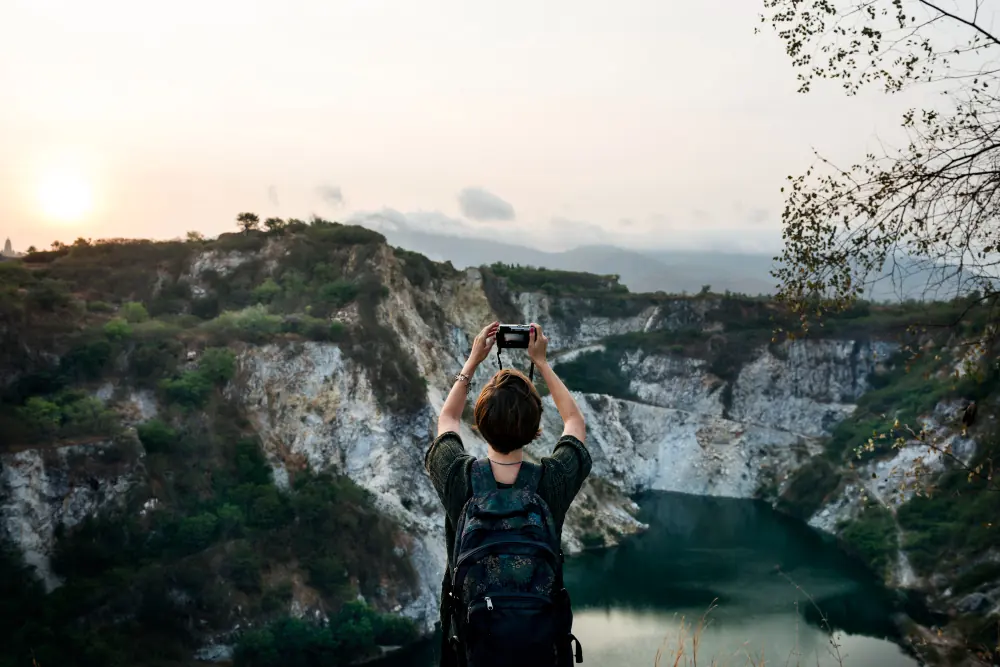
- Include a person for scale. A small figure walking away from you makes a mountain look like a mountain, and that person need not be you.
- Find the frame, then wait. Find a good background and give it two minutes. Sooner or later a cyclist or a tram or a man with a ladder will walk into it.
Light: when to shoot
The same street can look ordinary at noon and superb at seven. If you change only one habit, get up an hour earlier twice a trip.
| When | What the light does | Good for |
|---|---|---|
| First hour after sunrise | Low, soft and warm, with empty streets | Famous sights, without the crowds |
| Midday | Hard and overhead, with dark eye sockets | Markets, interiors, shady courtyards, lunch |
| Last hour before sunset | Golden and flattering | Faces, stone, coastlines |
| Twenty to thirty minutes after sunset | Deep blue sky with the lights coming on | Cities, bridges, lit windows |
| Overcast (Britain, generally) | Soft and even, with rich colours | Portraits, streets, forests, food |
Two more things. Tap the brightest important part of the scene and drag the exposure down until the sky keeps its colour. Dark shadows can be rescued later, but a burnt-out white sky is gone for good. And for food, sit by a window, then turn the plate rather than yourself.
Light also changes a lot with latitude and season. In Iceland, as we explain in summer and winter compared, the low light can last for hours in June, and a few hours is all you get in December. Our week in Portugal gives you long, golden evenings by the river in Porto. At night, use night mode and brace the phone on a wall or a railing for the few seconds it needs.
Editing: five minutes, no more
The editor built into your phone is enough. Do it in the evening, with a drink, on a medium brightness screen, because full brightness makes everything look better than it is.
- Choose. Be brutal. A magazine shoots hundreds and prints eight. Delete the near-duplicates first.
- Crop and straighten. This fixes more bad pictures than any other control.
- Set the exposure. Brighten or darken until the main subject looks right.
- Pull the highlights down and the shadows up. A little of each will bring back the sky and the detail.
- Adjust warmth. Nudge it slightly warm for a sunset, and slightly cool for snow or sea.
- Stop. Compare with the original. If people can tell it has been edited, go back halfway.
Use a similar look across a whole trip. Twelve pictures that plainly belong together will look more like a magazine feature than twelve individually perfect ones. Keep the originals too, as you will edit differently in five years' time.
Common mistakes
- Filters at full strength. If you use one at all, turn it down to a quarter.
- All wide views. Magazines mix wide shots with details: a door handle, a plate, a pair of hands at a market stall. Those details are what make it feel like a place.
- The postcard spot. Take that one, then turn round and photograph the people photographing it.
- Standing in the middle of everything. Crouch, or find a step. Nobody has seen the world from a height of exactly five foot six and been amazed.
- Watching the whole sunset on a screen. Take your three pictures, then put the phone away. I have this one in the spreadsheet four times.
Comments (2)
Sophie Marsh
I wiped my lens for the first time in about two years after reading this and the difference was embarrassing. My pictures of Whitby are still foggy, but in fairness so was Whitby.
Imran Qureshi
My skies either come out bright white or look oddly cartoonish. Should I turn the automatic HDR setting off?
VAMOSVIVER editors Editorial reply
We would leave it on for most scenes, as it helps with bright skies. If a picture looks overcooked, try dropping the exposure slightly before you shoot, then ease the contrast and shadows back a little in the edit.
Leave your comment
Your email address will not be published. Comments appear after moderation. All fields are required.